Are Factor meals healthy? We read all 477 labels
Factor publishes a full nutrition label and an ingredient list for every meal, then shows you two numbers on the card. We read every dish in our captured catalog, 477 dishes across 10 weekly menus since September 2026, the way a careful subscriber would: for protein, sodium, saturated fat, fiber, and what is actually in the food. This is what they say, with the meals that come out well.
Labels, ratings and figures are Factor's own. Captured Oct 17, 2026. Gramwise is independent of Factor and not affiliated with it.
The short answer
- Are Factor meals healthy?
- By Factor's own labels, the average of the 438 Factor dinners captured through Oct 17, 2026 has 536 calories, 34 g of protein, 892 mg of sodium and 9.6 g of saturated fat. Protein and calories are consistent across the menu; sodium and saturated fat vary widely, so the healthy choice depends on which dinners you pick. 16 percent of dinners have 700 mg of sodium or less and 10 g of saturated fat or less.
- Are Factor meals high in sodium?
- 27 percent of Factor dinners captured by Oct 17, 2026 have 1,000 mg of sodium or more, and the range runs from 360 to 1,400 mg. 19 percent are at 700 mg or less.
- Do Factor meals contain preservatives?
- Some Factor meals list a preservative inside a component. The consumer label lists components without their contents; in the 368 full statements Factor's business store published, read on Sep 26, 2026, natamycin, a mold inhibitor used in cheese, appears in 168 dishes and calcium propionate in 84. None lists sodium benzoate, potassium sorbate, sodium nitrite, BHA or BHT. Sulfites, most of them declared in the wine used in sauces, appear in 230.
- Which Factor meals are the healthiest?
- By the label, the strongest Factor dinners are the ones with 30 g or more of protein, 700 mg or less of sodium and 10 g or less of saturated fat. There are 9 of them on the Oct 27, 2026 menu, and the picker can hold those three limits for you every week.
Opens the picker with 30 g protein or more, 700 mg sodium or less and 10 g saturated fat or less already set, and remembers them next week.
The average Factor dinner has 536 calories, 34 g of protein and 892 mg of sodium.
The label below is the average of 438 dinners. The bars beside each row show the spread: the middle half of dinners as the darker band and the full range as the thin line, with the lowest and highest dinner printed at the ends. The middle half of dinners sits between 470 and 600 calories and between 30 and 39 g of protein. Sodium runs from 360 to 1,400 mg and saturated fat from 1.5 to 27 g, which is where choosing matters.
Nutrition Facts
Average of 438 Factor dinners
% Daily Value
- Total Fat 28g36%Across dinners, the total fat figure runs from 10 to 54 g, with the middle half between 21 and 34.
- Saturated Fat 9.6g48%48 percent of the 20 g daily limitAcross dinners, the saturated fat figure runs from 2 to 27 g, with the middle half between 6 and 13.
- Sodium 892mg39%39 percent of the 2,300 mg daily limitAcross dinners, the sodium figure runs from 360 to 1,400 mg, with the middle half between 770 and 1,010.
- Total Carbohydrate 38g14%Across dinners, the total carbohydrate figure runs from 12 to 83 g, with the middle half between 29 and 46.
- Dietary Fiber 6g21%21 percent of the 28 g daily valueAcross dinners, the dietary fiber figure runs from 3 to 11 g, with the middle half between 5 and 7.
- Total Sugars 10gAcross dinners, the total sugars figure runs from 3 to 29 g, with the middle half between 6 and 11.
- Protein 34gabout 62 percent of a 150 lb adult's daily needAcross dinners, the protein figure runs from 7 to 51 g, with the middle half between 30 and 39.
The line runs from the lowest dinner to the highest, the darker band covers the middle half, and the dot is the average.
The daily values are the FDA's for a 2,000 calorie diet. The protein need is 0.8 g per kilogram of body weight for a 150 lb adult, about 54 g.
Protein and saturated fat barely move together. Neither do protein and sodium.
Each point is one dinner. The correlation between protein and saturated fat is 0.06 and between protein and sodium it is -0.14, both close to zero on a scale where 1 means the two rise together and 0 means no relationship. In these captured dinners, protein says little about sodium or saturated fat, so check those figures separately. The dashed lines mark 30 g of protein and the page's limit for the nutrient on the vertical axis, and the tinted corner holds the dinners that meet both. Switch the vertical axis to see sodium or fiber, and color the points by one of Factor's tags to see what the tag does and does not cover.
Across 438 dinners, the correlation between protein and saturated fat is 0.06. The most saturated fat is in Cheesy Garden Herb Chicken, at 27 g, and the least is in Hoisin Chicken & Dumplings, at 1.5 g.
Across 438 dinners, the correlation between protein and sodium is -0.14. The most sodium is in All-American Secret Sauce Burger, at 1,400 mg, and the least is in Baja Barramundi Bowl, at 360 mg.
Across 438 dinners, the correlation between protein and fiber is -0.08. The most fiber is in Peanut Buddha Bowl, at 11 g, and the least is in Grilled Pork Chop & Smoked Cheddar Cauli Grits, at 3 g.
Show these 438 dinners as a list
27 percent of Factor dinners have 1,000 mg of sodium or more.
27percent119 of 438 dinners at 1,000 mg or more
Sodium is not one of the two numbers on Factor's card; it is on the full label one click in, and it runs from 360 mg to 1,400 mg across every dinner captured. A 1,000 mg dinner is 43 percent of the day's 2,300 mg before breakfast and lunch. The menu also has plenty of room at the low end: 15 of this week's 84 dinners are at 700 mg or less.
The lowest sodium dinners on the Oct 27 menu
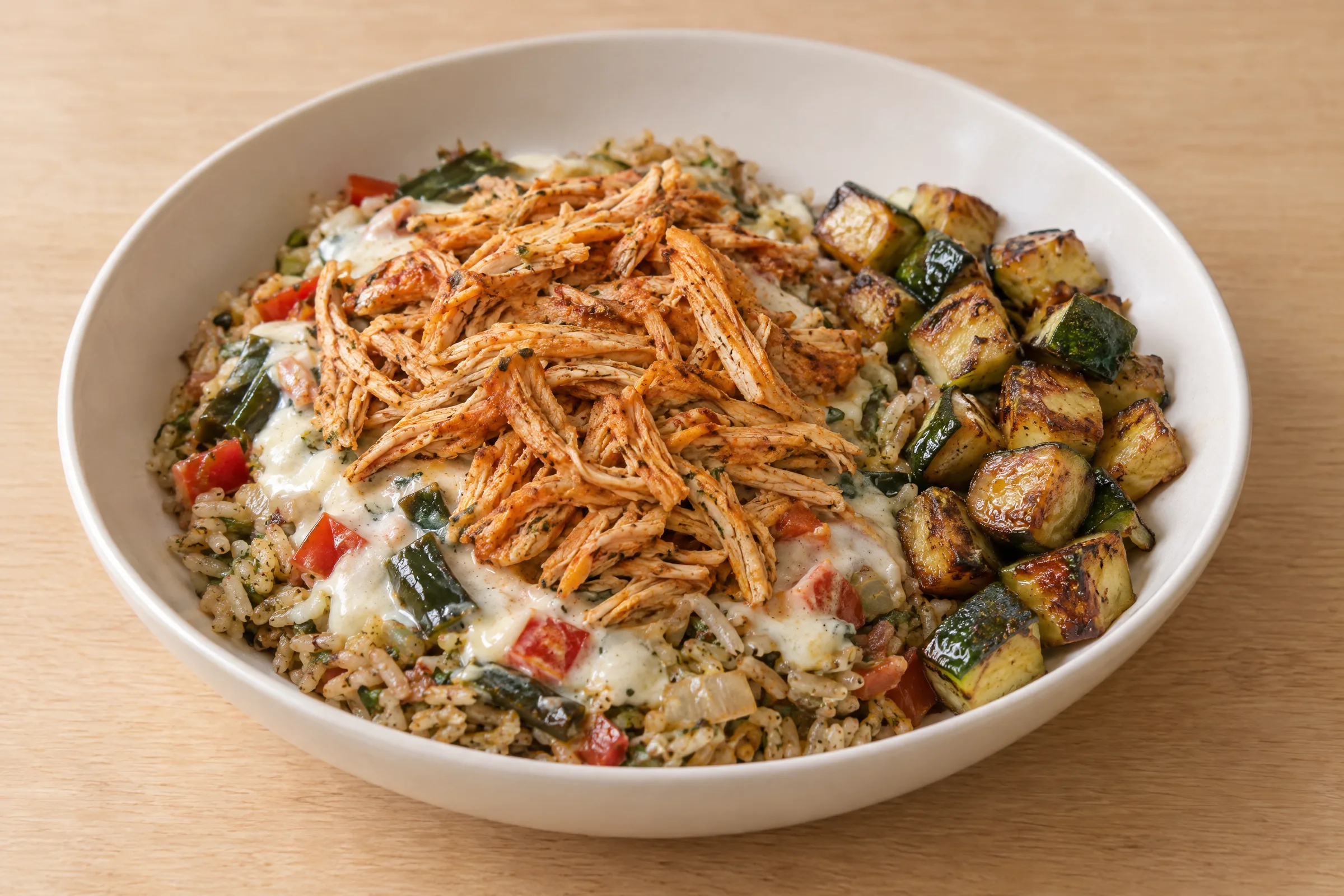 218Factor favorites
Pepper Fondue Shredded Chicken
with Cilantro-Tomato Rice & Zucchini
540mg sodium31g protein
35g carbs11g sat fat3g fiber
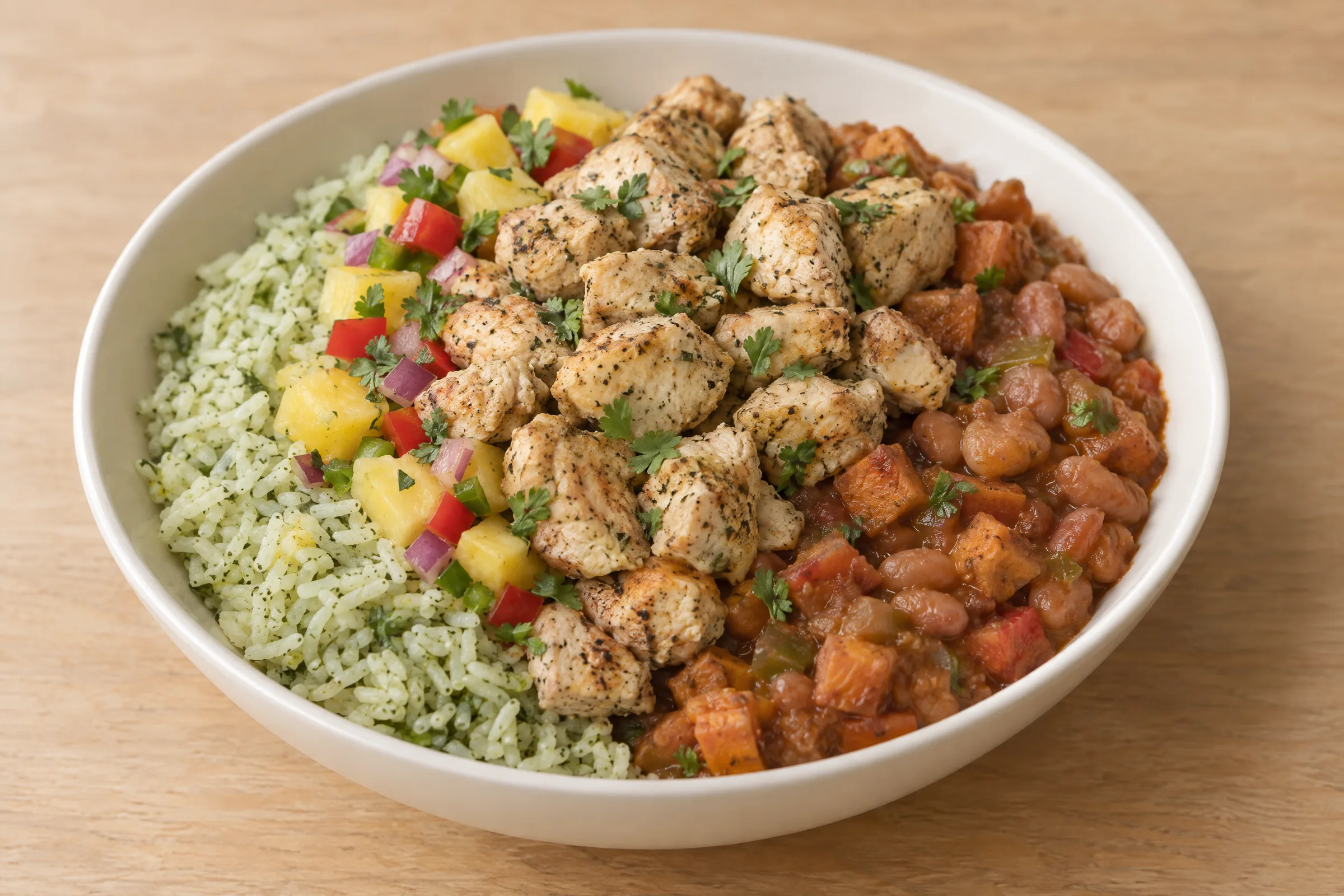 Heart Smart5Factor favorites
Mexican-Style Ranchero Chicken Bowl
with Sweet Potatoes & Pineapple Salsa
570mg sodium33g protein
52g carbs2.5g sat fat6g fiber
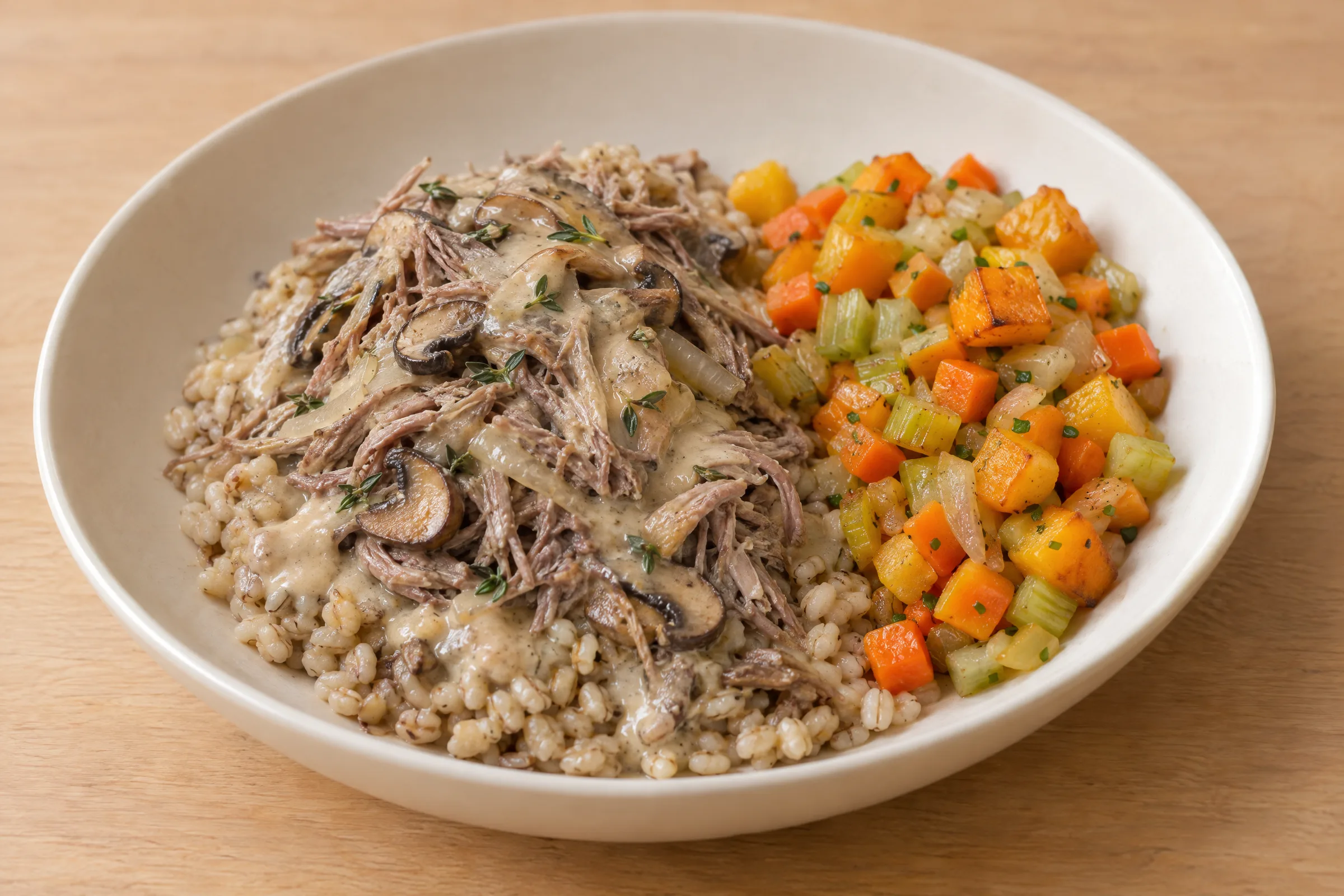 Heart Smart238Factor favorites
Mushroom Herb Shredded Beef & Barley
with Garlic Butternut Squash Medley
570mg sodium31g protein
41g carbs6g sat fat8g fiber
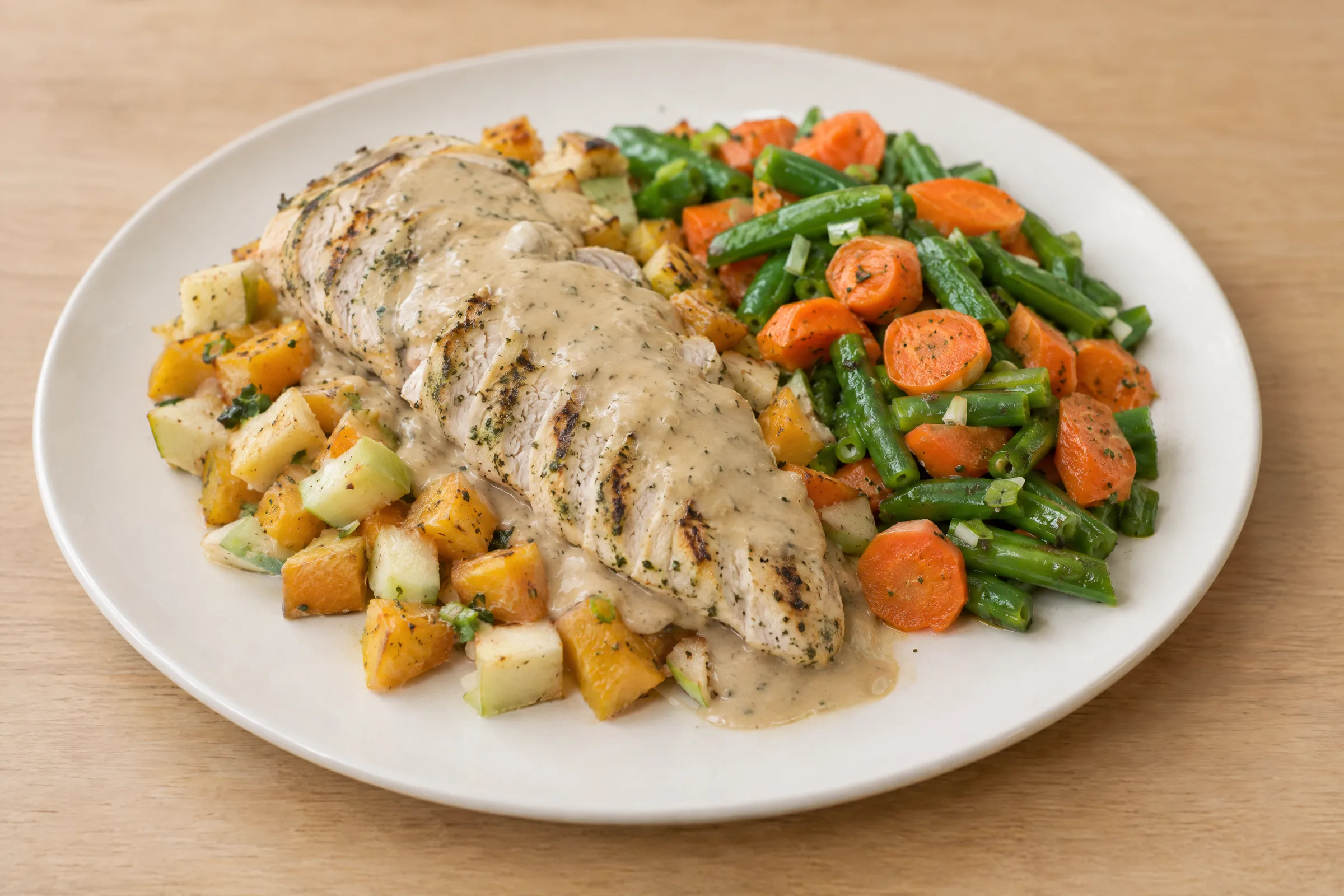 Heart Smart37Factor favorites
Rosemary Chicken & Apple-Butternut Hash
with Green Beans & Carrots
580mg sodium39g protein
36g carbs3.5g sat fat10g fiber
 Heart Smart288Factor favorites
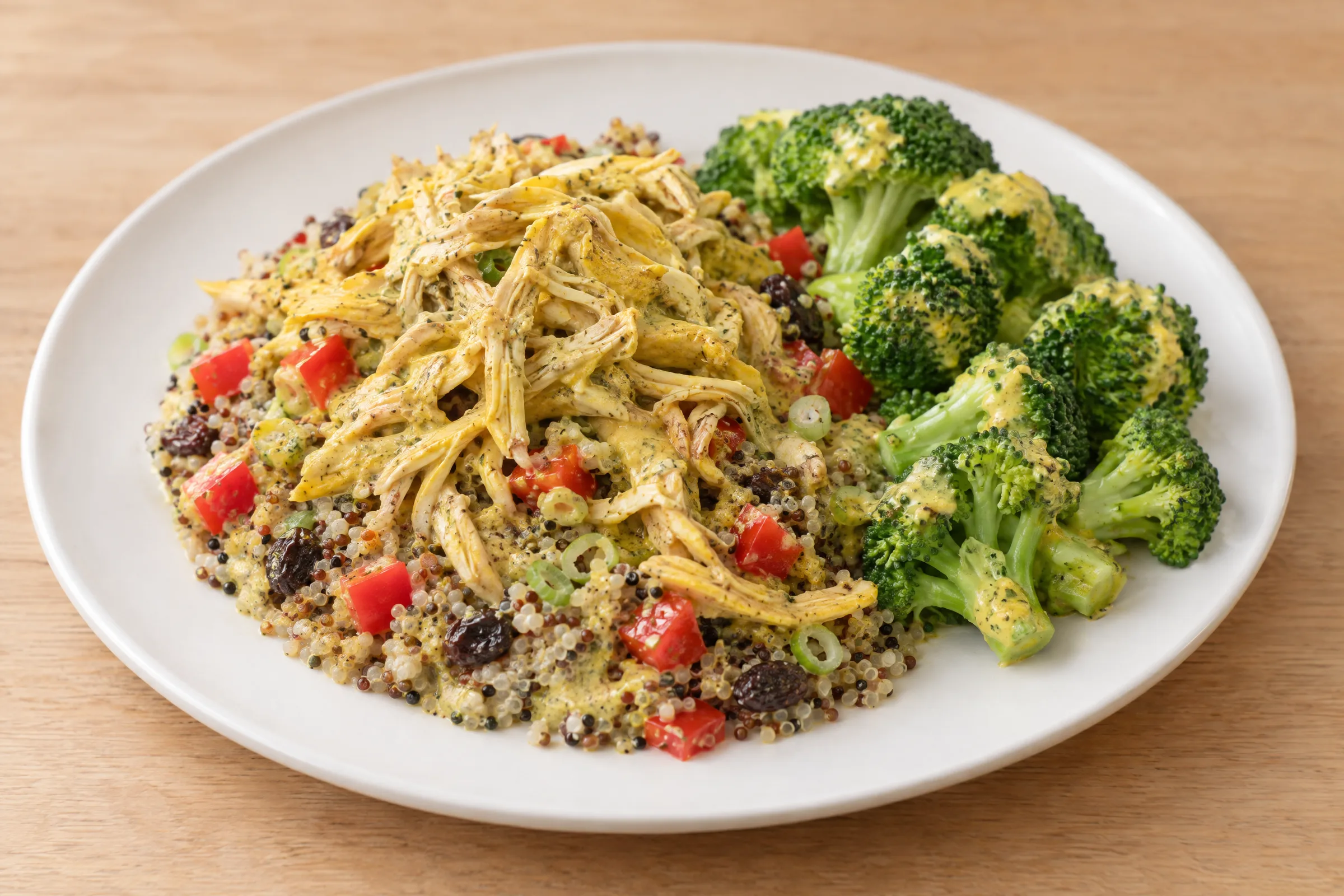
Curried Chicken Quinoa Bowl
with Raisins, Broccoli & Yogurt Sauce
580mg sodium35g protein
50g carbs4g sat fat7g fiber
 2.3KFactor favorites
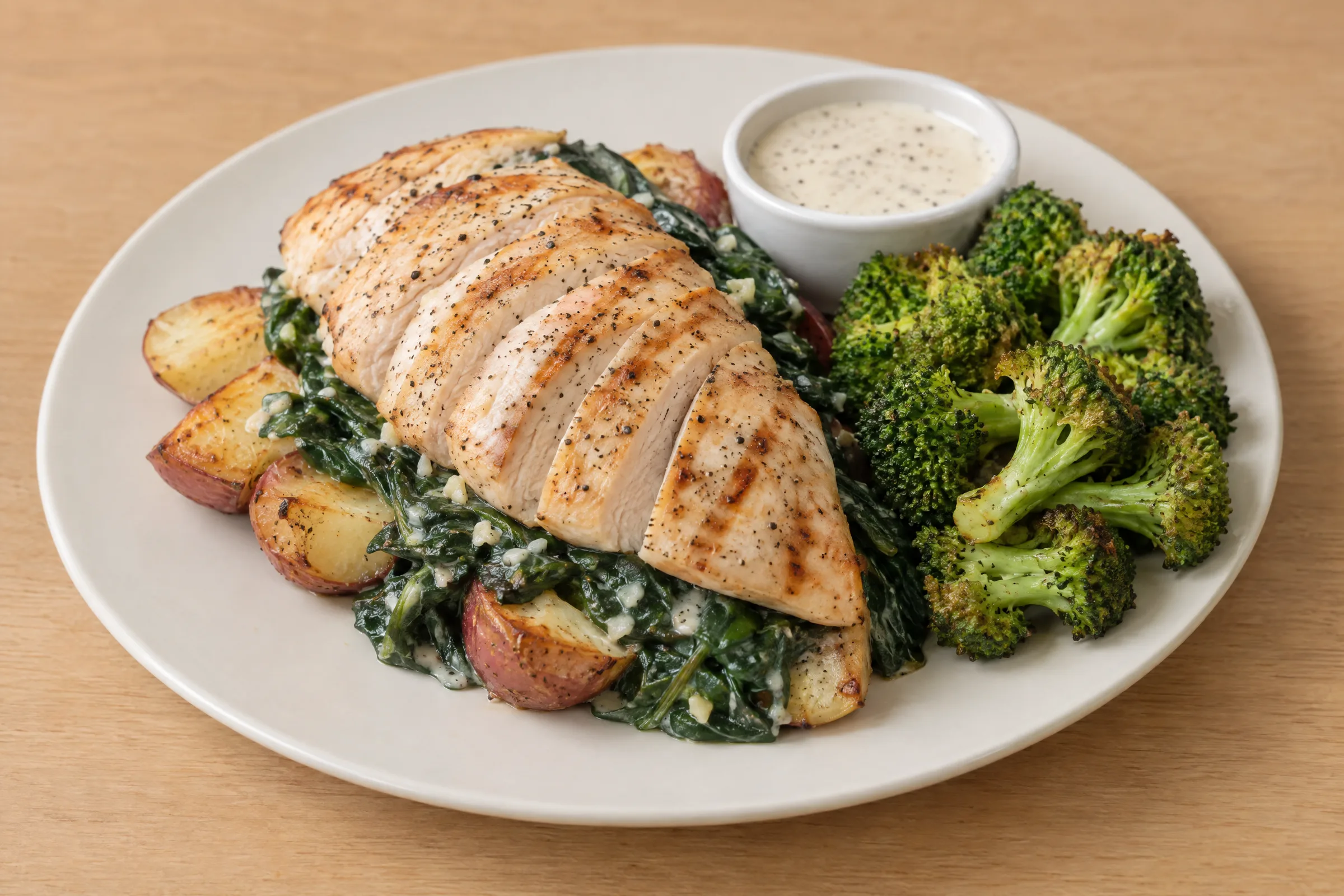
Parmesan Cream Chicken
with Spinach, Roasted Potatoes & Broccoli
590mg sodium42g protein
22g carbs11g sat fat5g fiber
Opens the picker with at most 700 mg sodium, and no other limit.
Nearly half of Factor dinners carry half a day of saturated fat.
46percent201 of 438 dinners at 10 g or more
The dinners over the line are mostly the ones with a cream sauce or cheese: 98 percent of them name dairy among their components, against 62 percent of the dinners under it. 46 of this week's 84 dinners are at 10 g or less.
The dinners with 10 g of saturated fat or less on the Oct 27 menu, most protein first
 9Factor favorites
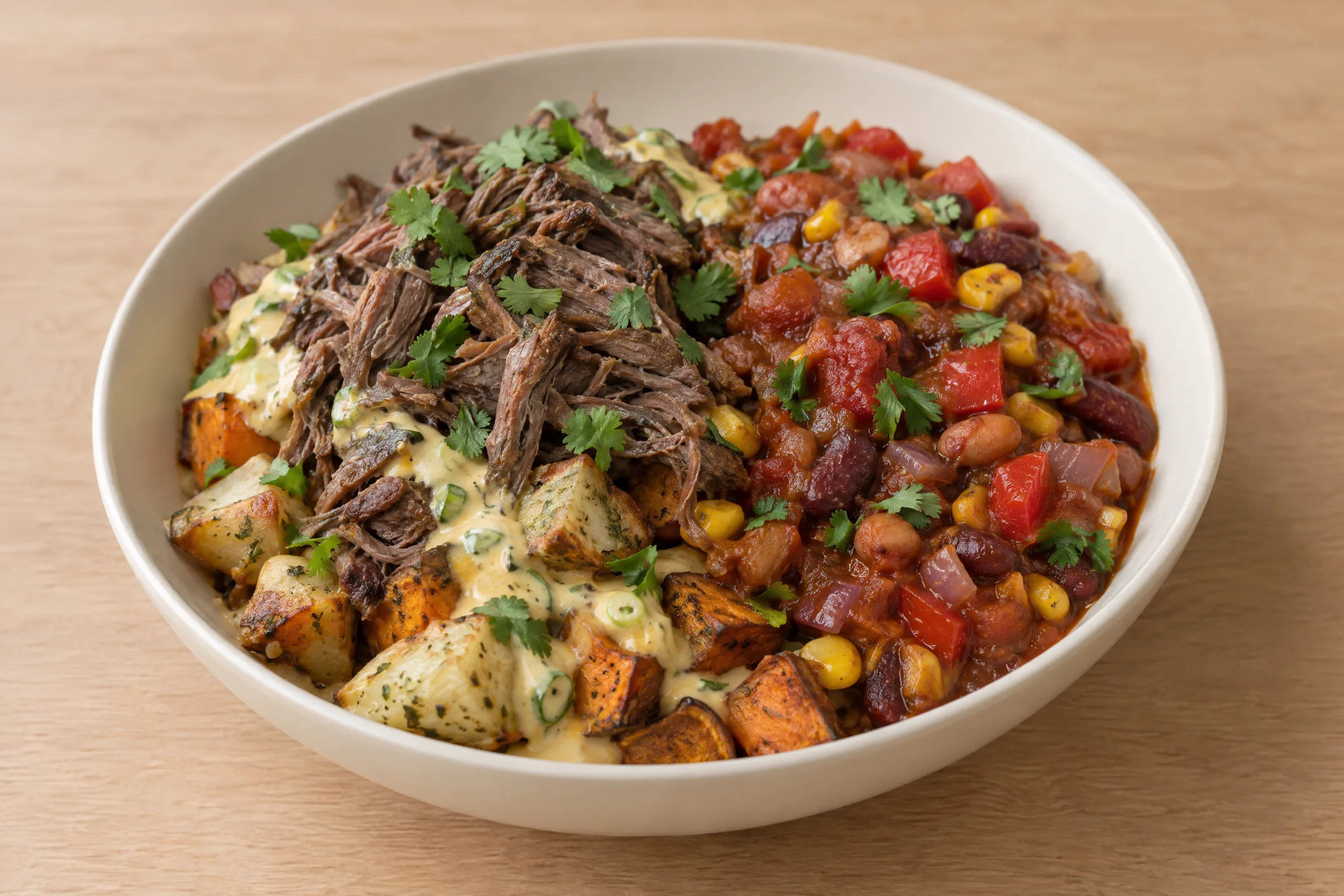
Smokehouse Shredded Beef & Chili
with Sweet Potatoes & Scallion Cheese Sauce
46g protein620 kcal
930mg sodium46g carbs10g sat fat7g fiber
 +$14.992.5KFactor favorites
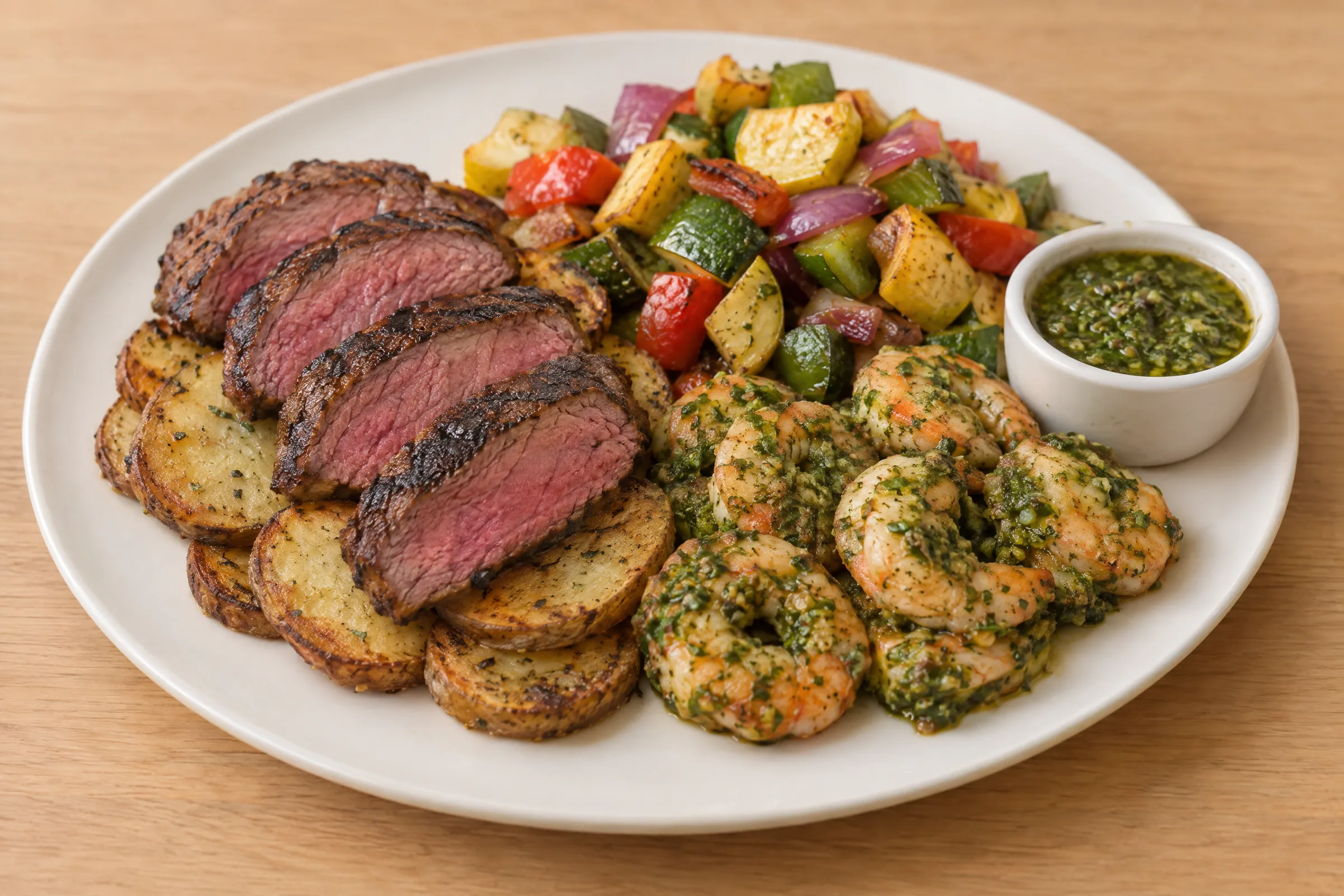
Chimichurri Filet Mignon & Shrimp
with Zucchini Pepper Sofrito & Potatoes
46g protein640 kcal
1,000mg sodium31g carbs8g sat fat4g fiber
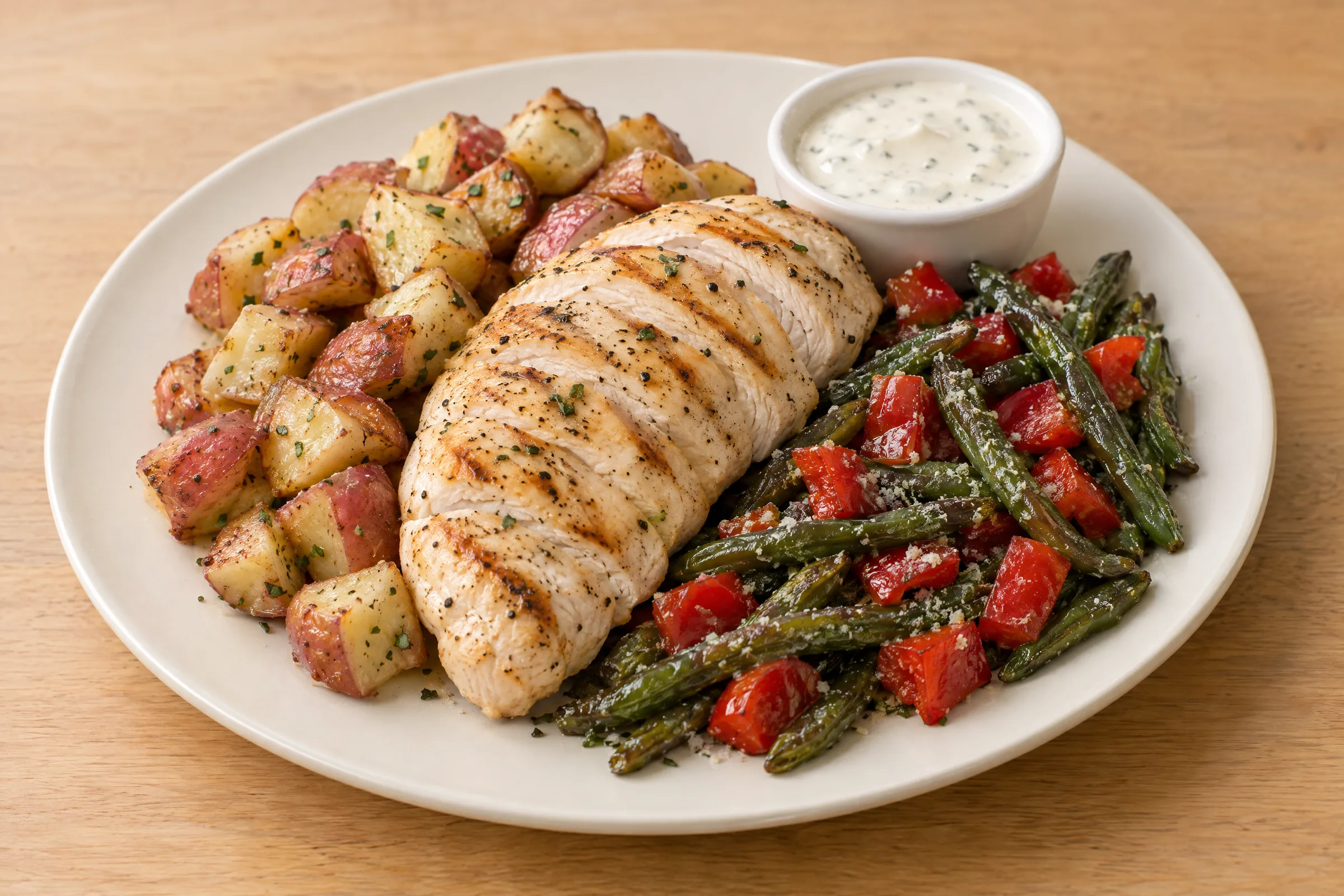 5.1KFactor favorites
Smoky Gouda Chicken
with Potatoes & Parmesan Green Beans
43g protein560 kcal
910mg sodium33g carbs10g sat fat6g fiber
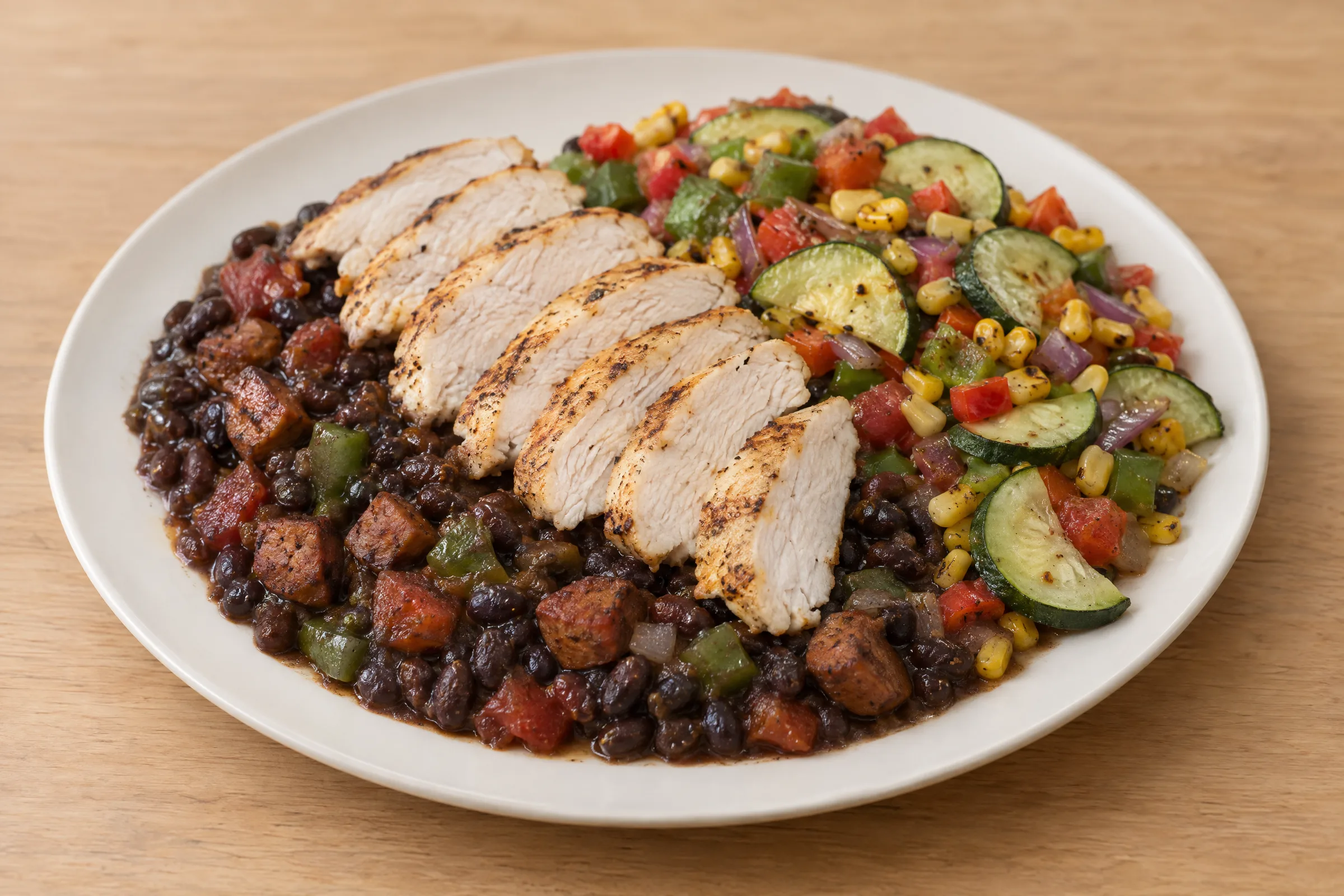 639Factor favorites
Smoky Chicken & Stewed Black Beans
with Chicken Andouille & Vegetable Medley
42g protein420 kcal
820mg sodium26g carbs3g sat fat6g fiber
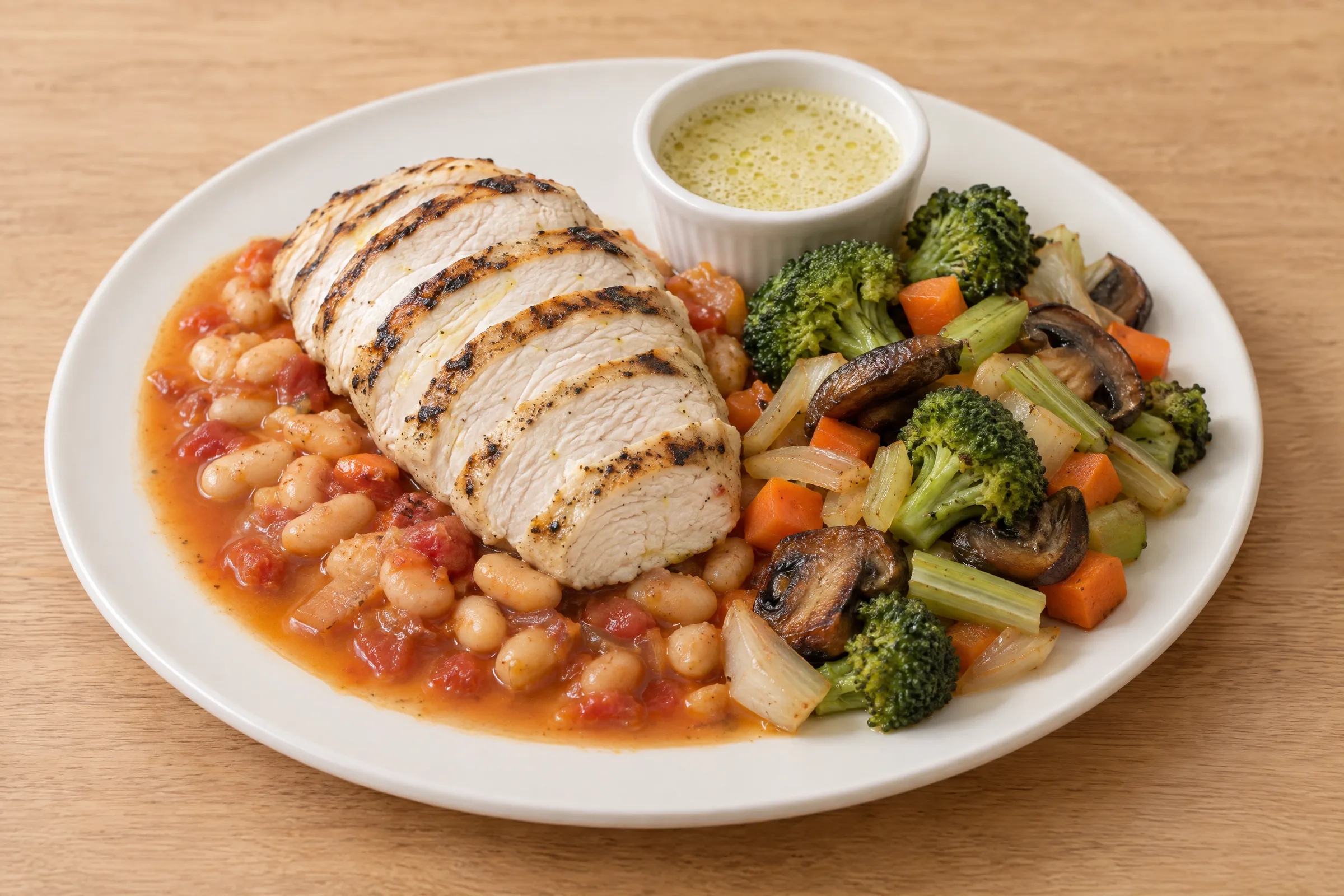 512Factor favorites
Chicken, Mushroom & White Bean Cassoulet
with Broccoli & Mustard Vinaigrette
42g protein460 kcal
710mg sodium24g carbs4g sat fat8g fiber
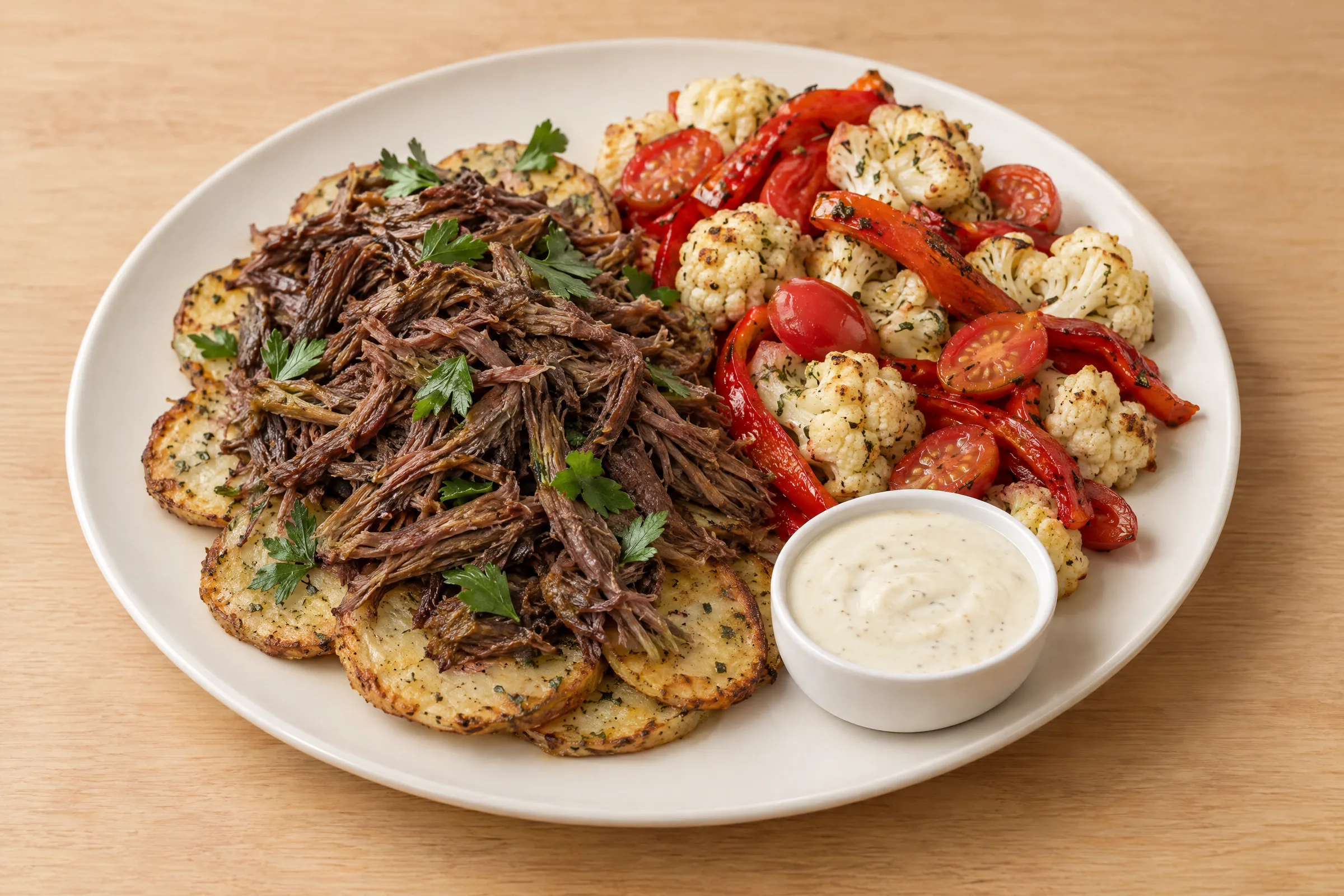 5.2KFactor favorites
Garlic-Parmesan Cream Shredded Beef
with Herbed Potatoes, Cauli & Peppers
42g protein550 kcal
1,120mg sodium32g carbs10g sat fat5g fiber
Opens the picker with at most 10 g saturated fat, and no other limit.
Three ways to eat well from Factor's menu this week.
Lean and strong
30 g or more protein and 10 g or less saturated fat.
36of this week's 84 dinners
Opens the picker with 30 g protein or more and 10 g saturated fat or less already set.
Low salt, high protein
700 mg or less sodium and 30 g or more protein.
13of this week's 84 dinners
Opens the picker with 700 mg sodium or less and 30 g protein or more already set.
Light
600 calories or fewer and 10 g or less saturated fat.
42of this week's 84 dinners
Opens the picker with 600 calories or fewer and 10 g saturated fat or less already set.
Four ingredients are in nearly every Factor dinner.
Olive pomace oil, salt, garlic and onion are the base of almost the entire menu. Pomace oil is the refined grade of olive oil, made from the paste left after the first pressing, and Factor uses a blend of it with extra virgin oil. Below the base come the flavors that divide people, and the proteins. Where the picker has a rule for an item, the item also says how many of this week's dinners pass that rule, because a dislike is easier to act on as a rule than as a warning.
The base
Olive pomace oil: in every dinner captured.
Salt: in every dinner captured.
Garlic, in any form: in every dinner captured.
Onion, in any form: in all but 1 dinner captured.
Flavors people feel strongly about
Chili or other heat: in 56 percent of all dinners captured.
Cilantro: in 34 percent of all dinners captured.
51 of this week's 84 dinners pass the picker's rule against it.
Lime: in 32 percent of all dinners captured.
Coconut, including coconut sugar and coconut aminos: in 24 percent of all dinners captured.
Ginger: in 13 percent of all dinners captured.
The proteins
Chicken, including chicken stock: in 58 percent of all dinners captured.
Beef: in 22 percent of all dinners captured.
Pork, bacon, ham or chorizo: in 18 percent of all dinners captured.
72 of this week's 84 dinners pass the picker's rule against it.
Fish, excluding fish sauce: in 10 percent of all dinners captured.
76 of this week's 84 dinners pass the picker's rule against it.
Shellfish: in 9 percent of all dinners captured.
77 of this week's 84 dinners pass the picker's rule against it.
Tofu, tempeh, edamame or seitan: in 4 percent of all dinners captured.
Eggs: in 2 percent of all dinners captured.
69 of this week's 84 dinners pass the picker's rule against it.
Turkey: in 1 percent of all dinners captured.
Things people avoid
Dairy (milk, cream, cheese, butter or yogurt): in 79 percent of all dinners captured.
17 of this week's 84 dinners pass the picker's rule against it.
Cheese: in 63 percent of all dinners captured.
Added sugar, honey or syrup: in 35 percent of all dinners captured.
Xanthan gum: in 29 percent of all dinners captured.
Beans, lentils or chickpeas: in 28 percent of all dinners captured.
42 of this week's 84 dinners pass the picker's rule against it.
Tapioca ingredients or corn starch: in 21 percent of all dinners captured.
Mushrooms: in 12 percent of all dinners captured.
70 of this week's 84 dinners pass the picker's rule against it.
Soy, including tamari, miso and tofu: in 10 percent of all dinners captured.
78 of this week's 84 dinners pass the picker's rule against it.
Tree nuts: in 7 percent of all dinners captured.
76 of this week's 84 dinners pass the picker's rule against it.
Peanuts: in 3 percent of all dinners captured.
81 of this week's 84 dinners pass the picker's rule against it.
Whole olives: in 2 percent of all dinners captured.
84 of this week's 84 dinners pass the picker's rule against it.
Shares are over the 438 dinners with a published ingredient list, across all captured dinners, and count the components Factor names on the consumer label, so an ingredient inside a component may not be counted. The weekly counts run the picker's own rule for that item over every dinner on this week's menu, so a meal counted there is one the picker keeps.
The full ingredient statements, available for 368 of 384 dishes, list what is inside each component.
From the full statements Factor's business store published for 368 of the 384 dishes, read on Sep 26, 2026; matched by whole words.
The label on the consumer menu names the components ("grated Parmesan cheese", "chicken stock concentrate"). Factor's business store prints what is inside each one. Across the 368 statements, natamycin appears in 168, calcium propionate in 84, a phosphate in 115, xanthan gum in 285, guar gum in 179 and palm oil in 84. An artificial flavor is declared in 12, in the white truffle oil of the truffle dishes. No statement names sucralose, stevia or erythritol. These are legal, common food ingredients; they are listed here because the consumer label does not show them, and some people choose around them.
Preservatives
Natamycin, a mold inhibitor used in cheese: in 168 of 368 statements.
Calcium propionate: in 84 of 368 statements.
No matches for these named terms in the covered statements: sodium benzoate, potassium sorbate, sodium nitrite, BHA, BHT.
Sulfites
Most are declared in the wine used in sauces, and sodium metabisulfite keeps cut potatoes from browning. Each dish counts once however many of them it lists, and the count says nothing about the amount.
Sulfiting agents, including sodium metabisulfite on potatoes and sulfites declared in wine: in 230 of 368 statements.
Phosphates
This count does not distinguish purpose or amount and is not a health assessment.
A phosphate ingredient, including leavening agents and minerals: in 115 of 368 statements.
Gums and thickeners
Xanthan gum: in 285 of 368 statements.
Cellulose: in 184 of 368 statements.
Guar gum: in 179 of 368 statements.
No matches for these named terms in the covered statements: carrageenan, modified starch.
Palm oil
Palm oil: in 84 of 368 statements.
Flavors
Natural flavors: in 241 of 368 statements.
Artificial flavor, in the white truffle oil of the truffle dishes: in 12 of 368 statements.
Colors
An added color: in 86 of 368 statements.
Annatto: in 44 of 368 statements.
No matches for these named terms in the covered statements: paprika extract, caramel color.
Sweeteners
Sugar inside a component: in 68 of 368 statements.
No matches for these named terms in the covered statements: dextrose, maltodextrin, corn syrup, sucralose, stevia, erythritol.
Terms were matched on whole words in the statement, so "to preserve color" does not count as a color. Statements were matched to our dishes by dish name, and the business store's recipe version was not checked against the consumer one.
How we read the labels
- The data comes from Factor's public menu and recipe pages, the same pages any visitor sees without signing in. We check them every six hours and capture each page at least once a day. The first capture was in September 2026 and the latest menu sighting was on Oct 17, 2026: 701 versions of 477 dishes across 10 weekly menus.
- A dish is the meal you would recognize from week to week, and a version is one recipe of that dish with its own label. Each dish is described by its most recent stored version. When Factor changes a recipe, the newer label replaces the older one, so figures from different dishes may have been observed on different days.
- For each dish we keep the twelve figures Factor prints per serving (calories, protein, carbohydrate, fat, saturated fat, fiber, sugars, sodium, cholesterol, potassium, calcium and iron), the serving size, the ingredient list as the recipe page prints it, the allergens Factor lists, Factor's tags, Factor's favorites count and the weeks the dish was on the menu.
- We have no per-ingredient amounts, because Factor does not publish them. We also do not keep prices, because Factor prices by plan rather than by meal, and we do not keep Factor's photos, its menu descriptions or member ratings.
- The tags were checked against the labels: for each tag we report the lowest or highest value among the dinners that carry it, such as the lowest protein figure among High Protein dinners. That is what we observed, not Factor's definition of the tag.
- Ingredients were matched on Factor's own ingredient names and families, on whole words, so olive oil does not count as olives and coconut milk does not count as dairy.
- This week's counts cover every dinner on the Oct 27 menu, sold-out ones included; a dinner with no published figure for a limit is not counted as meeting it.
- The full ingredient statements come from Factor's business store, which prints the contents of each component. They were available for 368 of 384 dishes, dinners and add-ons, on Sep 26, 2026, and only counts are kept here.
- The daily values are the FDA's for a 2,000 calorie diet: 2,300 mg of sodium, 20 g of saturated fat and 28 g of fiber.
- Gramwise is independent of Factor, is not affiliated with it, and earns nothing from these figures.
What the terms mean
- Dinner and add-on
- A dinner is one of Factor's main meals, the ones its weekly menu is built from. Add-ons are everything sold beside them, such as breakfasts, salads and protein shakes. Add-ons are counted in the dish total and left out of every dinner figure.
- Favorites
- Factor's own favorites counts, added up across the recipe versions of a dish, using the latest count for each version. It is not a count of people.
- Weeks offered
- The weekly menus a dish was listed on, counted from our first capture.
Researchers and journalists can request the underlying data through our contact page.
More from Factor’s labels
Share this
Someone read all 477 Factor labels: the average dinner has 892 mg of sodium and 9.6 g of saturated fat, and 27 percent have 1,000 mg or more.
https://gramwise.co/meals/factor/are-they-healthy
About these figures
This page is general information about the labels Factor publishes. It is not medical or nutrition advice, and it does not say whether any meal suits your health, diet or condition; ask your doctor or a registered dietitian about that.
Gramwise computes every count, share, average and comparison here from Factor's public pages as captured on the dates shown. A capture, a match or a calculation can be wrong, and Factor can change a recipe, label or menu at any time, so the meal you receive may differ. The label on the meal and Factor's own site are the authority.
Ingredient counts match words in Factor's ingredient statements. They can miss an ingredient named another way or count one that only shares a word, and they say nothing about amounts. Naming an ingredient here is not a claim that it is unsafe or unhealthy.
Where a page describes what one of Factor's tags appears to require, that is inferred from the dishes carrying the tag and is not Factor's definition. Daily values are the FDA's reference amounts for a 2,000 calorie diet, and your own needs may differ.
Gramwise provides these pages as they are, without any warranty that they are accurate or complete, as set out in the terms. If you find an error, contact us and we will correct it.